

Standing water is a symptom with a short list of causes. French drains, dry creeks and grading, and how to tell which one your yard needs.
Drainage
- September 14, 2026
- 2 minute read
- By the LKN crew
Fixing Yard Drainage in Carolina Clay
Clay is why drainage is its own trade here. Water that would soak away in an hour in sandy soil sits on Piedmont clay all weekend, and everything downhill of a roofline or a slope collects what the soil refuses.
Match the fix to the water
- Water arriving from gutters: downspout piping. Roof water should leave in a buried pipe to daylight or a pop-up, not pour into a bed six feet from the foundation.
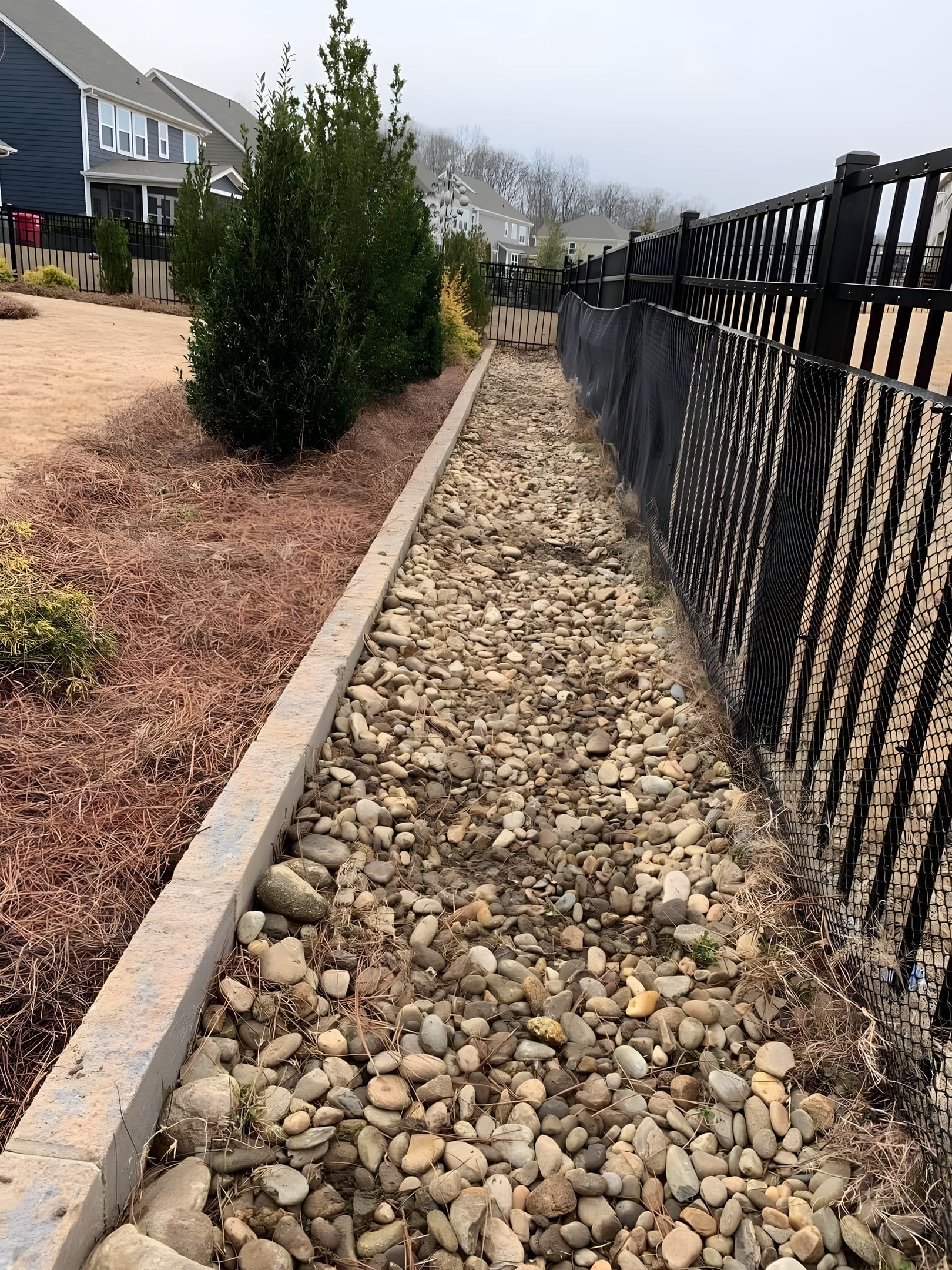
- Water moving across the surface: a dry creek or swale. A graded, rock-lined path gives storm water somewhere to go and looks like landscaping instead of plumbing.
- Water sitting in the soil: a French drain. Perforated pipe in washed gravel, wrapped in fabric, set to fall, collecting groundwater along its whole length.
- Water pooling in low spots: regrading. Sometimes the honest fix is moving soil so the yard sheds water instead of cupping it.
Most soggy yards need two of these working together, which is why a pipe alone so often disappoints.
The details that decide whether it works
Fall matters most. A drain without steady slope is a buried trough. Fabric matters next, because gravel with no separation from clay silts shut in a few seasons. And every fix ends at a real outlet; water has to be given somewhere better to be.
Worth fixing before the next project
Drainage is the first chapter of every other outdoor project on clay. Patios, walls and plantings all last longer on a yard that sheds water. If part of yours stays wet for days after rain, have us look at it before anything else gets built on top of the problem.
Sound like your yard?
A 30-minute walkthrough, then a written, itemised quote within five calendar days. The number you approve is the number you pay.